

Quick Answer for Central Pennsylvania Homeowners
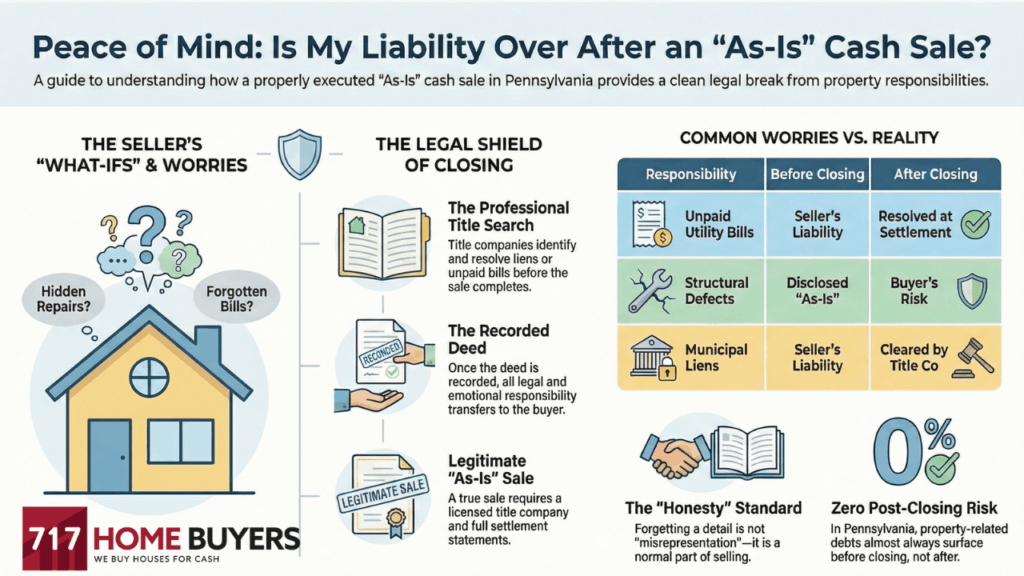
In most Pennsylvania as-is cash sales, once closing is complete and the deed is recorded through a legitimate title company, the seller is done. Ownership transfers and responsibility transfers with it. This is NOT the right choice if the estate/probate authority is not settled or if someone intentionally misrepresented a known defect.
Who This Advice Is For
- Widows or widowers selling after an illness or loss
- Heirs or executors handling an estate sale in Central PA
- Homeowners selling as-is to avoid repairs, inspections, and contractors
- Sellers who closed (or will close) through a licensed Pennsylvania title company
When This Is NOT the Right Choice
- You do not yet have clear authority to sell (estate/probate still unresolved)
- There is an active ownership dispute among heirs
- You are aware of a major defect and plan to hide it (intentional misrepresentation)
How to Decide What to Do
- If the closing is handled by a licensed PA title company and the deed is recorded, responsibility typically ends at that point.
- If there is a lien, unpaid tax, or municipal claim tied to the property, it is usually discovered during the title search before closing.
- If you are unsure about past repairs or records (common during illness, loss, or inheritance), document what you know and do not guess.
- If probate authority is still in progress, confirm you have the correct paperwork before signing anything.
Why This Works for Central PA Homeowners
A legitimate closing process in Pennsylvania is designed to prevent “surprises later.” Title companies perform a title search to uncover liens, taxes, and other issues that must be handled to transfer ownership cleanly.
If you want to understand the process better, here are helpful pages:
- Sell my house fast in Central PA
- How we buy houses in Pennsylvania (step-by-step)
- Home selling FAQs
- What to know about probate in real estate
- Cash sale vs auction in Pennsylvania
External authority resources (for deeper reading):
- Pennsylvania Association of Realtors: disclosure disputes and misrepresentation
- City guidance on water liens/judgments and settlement requests
- What title companies do at closing (title search, liens, taxes)
Watch the Podcast Episode

Full Podcast Transcript
Brian: Welcome back to the Central PA Property Talk Podcast. I’m Brian with 717 Home Buyers.
Chris: And I’m Chris. Today we’re answering a question that usually doesn’t come up before a sale, but almost always comes up after.
Brian: Yeah, it’s the quiet moment after closing. The house is sold, the paperwork is done, and then someone thinks, “Wait… am I really done?”
Chris: Specifically, after an as-is cash sale, is there any risk left for the seller?
Brian: And if that question has crossed your mind, you’re definitely not alone — especially here in Central Pennsylvania.
Chris: Let’s start with the clear answer, because clarity matters.
Brian: In most Pennsylvania as-is cash sales, once the closing is complete and the deed is recorded through a legitimate title company, the seller is done. Ownership transfers, and responsibility transfers with it.
Chris: That means you’re not responsible for future repairs, problems that show up later, or issues the buyer discovers after closing.
Brian: That’s the normal outcome. But people still worry, usually because selling a house happens during stressful moments in life.
Chris: Which brings us to the example we wanted to share.
Brian: We’ll call her Glenda Watson.
Chris: Glenda was a widow. Her husband had been ill for a long time before he passed away.
Brian: During that period, life wasn’t about staying perfectly organized. It was doctor visits, medications, and just getting through each day.
Chris: Some bills were on autopay, some weren’t. Records weren’t perfect.
Brian: There was also a basement that had leaked on and off over the years. They had addressed it, but Glenda wasn’t completely sure it had ever been fully sealed.
Chris: After her husband passed, the house felt overwhelming. Emotionally and practically.
Brian: She decided to sell the home as-is to a cash buyer because she didn’t want to deal with repairs, inspections, or contractors.
Chris: The sale itself went smoothly. They closed through a Pennsylvania title company. Everything was signed. The deed was recorded.
Brian: And then, a few weeks later, she called again.
Chris: Not upset. Not angry.
Brian: Just anxious.
Chris: She said, “I keep worrying. What if my husband missed a utility bill while he was sick? What if there was a contractor invoice I never saw? What if the basement wasn’t fully sealed and something comes back to me later?”
Brian: That question — “what if something comes back to me?” — is incredibly common, especially for widows, heirs, and people selling during hard seasons of life.
Chris: Here’s the key thing to understand. In Pennsylvania, those kinds of issues don’t usually pop up weeks or months after closing.
Brian: If there’s a lien, an unpaid tax, a municipal bill, or something tied to the property, it almost always shows up before closing, not after.
Chris: That’s literally what the title company is there to catch.
Brian: If something like a lien or unpaid balance exists, it may delay the closing, but it gets addressed as part of the closing process.
Chris: It’s not a surprise phone call later.
Brian: Once the sale closes and the deed is recorded, that chapter is closed.
Chris: And it’s also important to understand what sellers are not responsible for after an as-is sale.
Brian: You’re not responsible for repairs discovered later.
Chris: You’re not responsible for things that get worse over time.
Brian: You’re not responsible for the buyer’s renovations, inspections, or regrets.
Chris: If a buyer opens a wall months later and finds something unexpected, that’s part of owning the home.
Brian: Now, there are a few rare exceptions we should mention honestly.
Chris: One is probate timing. If an estate isn’t fully settled yet, additional paperwork may be needed later.
Brian: Another is intentional misrepresentation, which is rare. Forgetting something or being unsure is not the same as hiding a defect.
Chris: In Glenda’s case, she didn’t hide anything. She just didn’t have perfect information during a very difficult time.
Brian: This is why how a sale closes matters just as much as who you sell to.
Chris: A proper as-is cash sale should involve a licensed Pennsylvania title company, a full title search, settlement statements, and a recorded deed.
Brian: That process creates a clean legal handoff.
Chris: When we walked Glenda through all of this, step by step, you could hear the tension leave her voice.
Brian: Nothing had come back to her. Nothing was pending. Nothing was unresolved.
Chris: The house was no longer hers — legally or emotionally.
Brian: And that’s how it should be.
Chris: If you’re a widow or widower, if you’re selling after an illness, or if you’re handling an estate, these worries are normal.
Brian: But in most cases, once an as-is cash sale is done properly, the responsibility really does end there.
Chris: Selling your house should let you rest easy, not wait for the phone to ring.
Brian: If you ever want to talk through your situation or just get clarity with no pressure, you can call us at 717-321-SOLD or visit 717homebuyers.com.
Chris: We’re a local team here in Central Pennsylvania, and our job is to explain the process clearly — whether you sell to us or not.
Brian: Thanks for listening to the Central PA Property Talk Podcast.
Chris: We’ll see you next time.
Frequently Asked Questions
After an as-is cash sale in Pennsylvania, am I still responsible for repairs later?
No. After the closing is complete and the deed is recorded, future repairs and problems that show up later are the buyer’s responsibility.
Can unpaid property liens or taxes come back to me after closing?
In most cases, no. Liens, unpaid taxes, and similar issues tied to the property are typically discovered in the title search and handled as part of closing.
What if the buyer finds something behind a wall months later?
That is part of owning the home. After an as-is sale closes properly, the buyer owns both the property and the risk of future discoveries.
What are the rare exceptions where a seller might have issues after closing?
Two common exceptions are probate timing issues and intentional misrepresentation. Not knowing something or being unsure is not the same as hiding a known defect.
Why does closing through a title company matter?
A licensed Pennsylvania title company performs a title search, prepares settlement statements, and records the deed. That process creates a clean legal handoff.
Talk With a Local Central PA Home Buyer
If you want to talk through your situation or get clarity with no pressure, call 717-321-SOLD (717-321-7653) or visit 717HomeBuyers.com.
Author: Austin Glanzer | Last Updated: February 6, 2026